Teen Safety Online cannot become a Two-Tier System
تم النشر بتاريخ 28 آب 2026
This week’s landmark settlement in California raises critical questions on how tech companies protect their youngest users - the overwhelming majority of whom live outside of the United States. The measures required of Meta, which only applies to users in the U.S., present an opportunity to focus what tech companies can do to deliver accountability to their youngest users everywhere. But there are risks - both in applying rules too fast or too slowly.
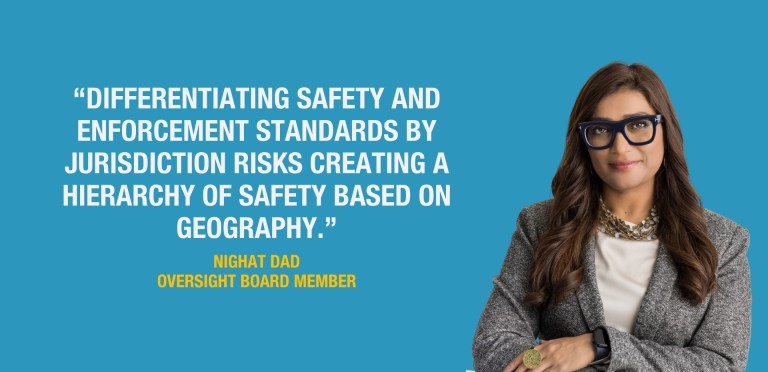
On one hand, differentiating safety and enforcement standards by jurisdiction risks creating a hierarchy of safety based on geography. Young people all around the world, whose experiences may not be represented in American courts, have the same human right to protection.
On the other, simply applying policy decisions forged in the unique context of one country to others without a second thought presents risks too. Users in the Global South have too often received hand-me-down policies from US companies, informed and shaped by contexts in North America or Europe, with little to no consideration of the contrasting experiences and rights implications for users outside of these jurisdictions. Good intentions in one context can become harmful exports in another.
Measures intended to improve safety may have their own consequences for privacy, freedom of expression, access to information, participation and a young person’s evolving autonomy; as well as the roles and responsibilities of parents. A safeguard negotiated in response to litigation is already hard to get right in one country. Transposing it to other cultural, social and legal contexts without understanding its impacts on young and diverse communities around the world may compromise, rather than improve, protection.
That’s why independent, rights-respecting analysis matters. It is essential to be sure we arrive at measures that consider human rights holistically – looking at how protections of one right may impact another, as well as how protections for one group of people may impact another group of people. And this matters most where the people at greatest risk from policy decisions are also those with the least access to justice or remedy.
Tech companies should treat this moment as an opportunity to assess what features can protect the rights of teens everywhere, not just where lawsuits are filed. That assessment should be transparent, evidence-based and grounded in international human rights standards, including the UN Convention on the Rights of the Child.
Real leadership here means inviting scrutiny that companies don’t control. That means independent and external oversight capable of making decisions based on the rights of people, rather than the commercial interest of the business. It means involving outside experts, civil society and, critically, parents and young people from around the world, to understand whether proposed solutions work.
None of this is easy. But the test that matters next is simple: does a company treat youth safety with the same seriousness whether the young person is in Los Angeles or Lahore? This moment is also an opportunity to try to build the kind of independent oversight that makes that possible. The industry should take it.


